Mogao Caves and the desert
Dunhuang is located in northwestern China, in Gansu Province, on the edge of the Gobi Desert. For centuries it was one of the most important oases on the Silk Road, a meeting point between cultures, religions and merchants travelling between China, Central Asia and the western world. Today it is known for its impressive desert landscapes and for housing some of the most important artistic treasures of Buddhism in China, making it a unique destination for those who want to discover the history and spirituality of the ancient Silk Road.
What to see?
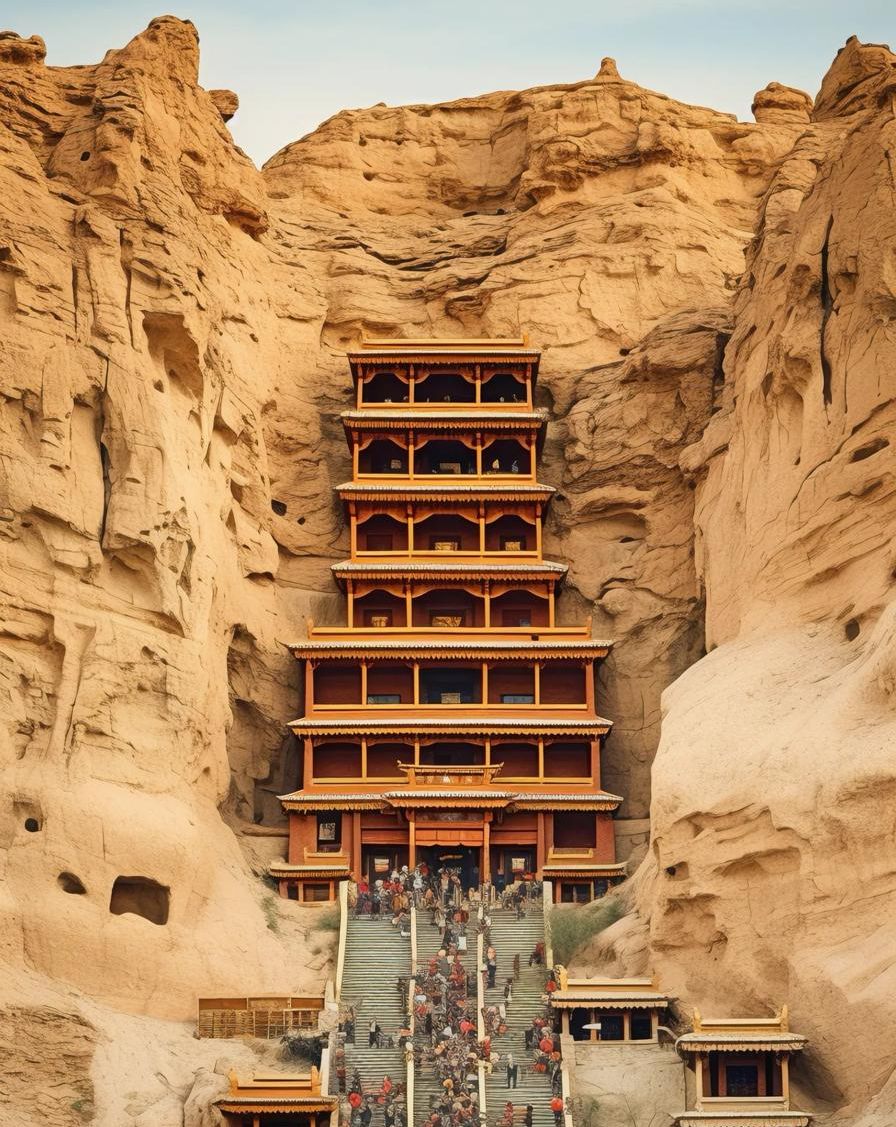
Mogao Caves
One of China's most important cultural treasures. This complex of rock-cut temples houses hundreds of caves with murals and Buddhist sculptures dating back over a thousand years.
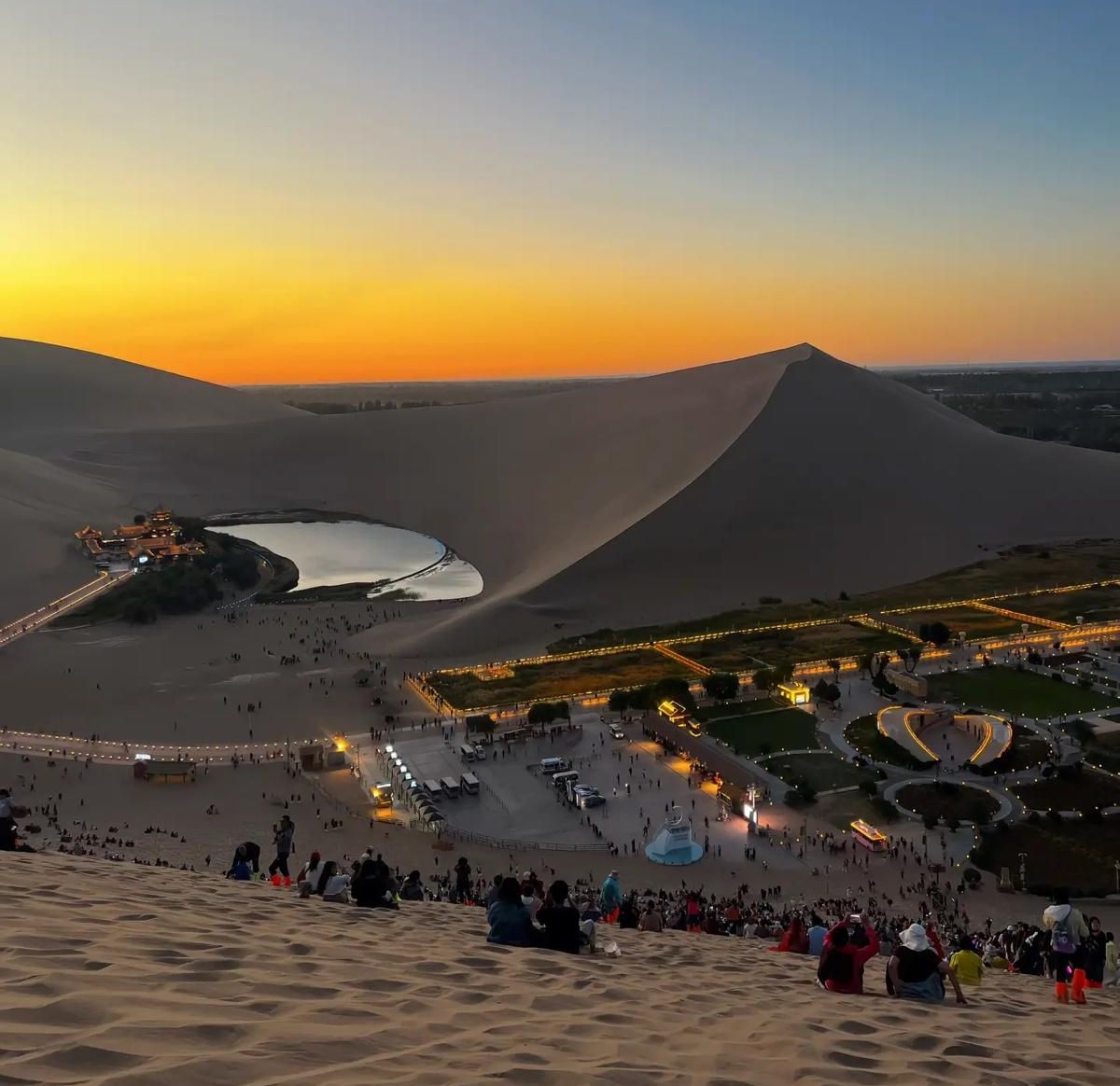
Mingsha Dunes and Crescent Moon Spring
The Mingsha Dunes, known as the "Singing Sand Mountain", form an impressive sea of golden dunes in the heart of the desert. In the middle of this landscape lies the Crescent Moon Spring, a small crescent-shaped oasis that creates one of Dunhuang's most surprising and iconic contrasts.
Recommended experiences
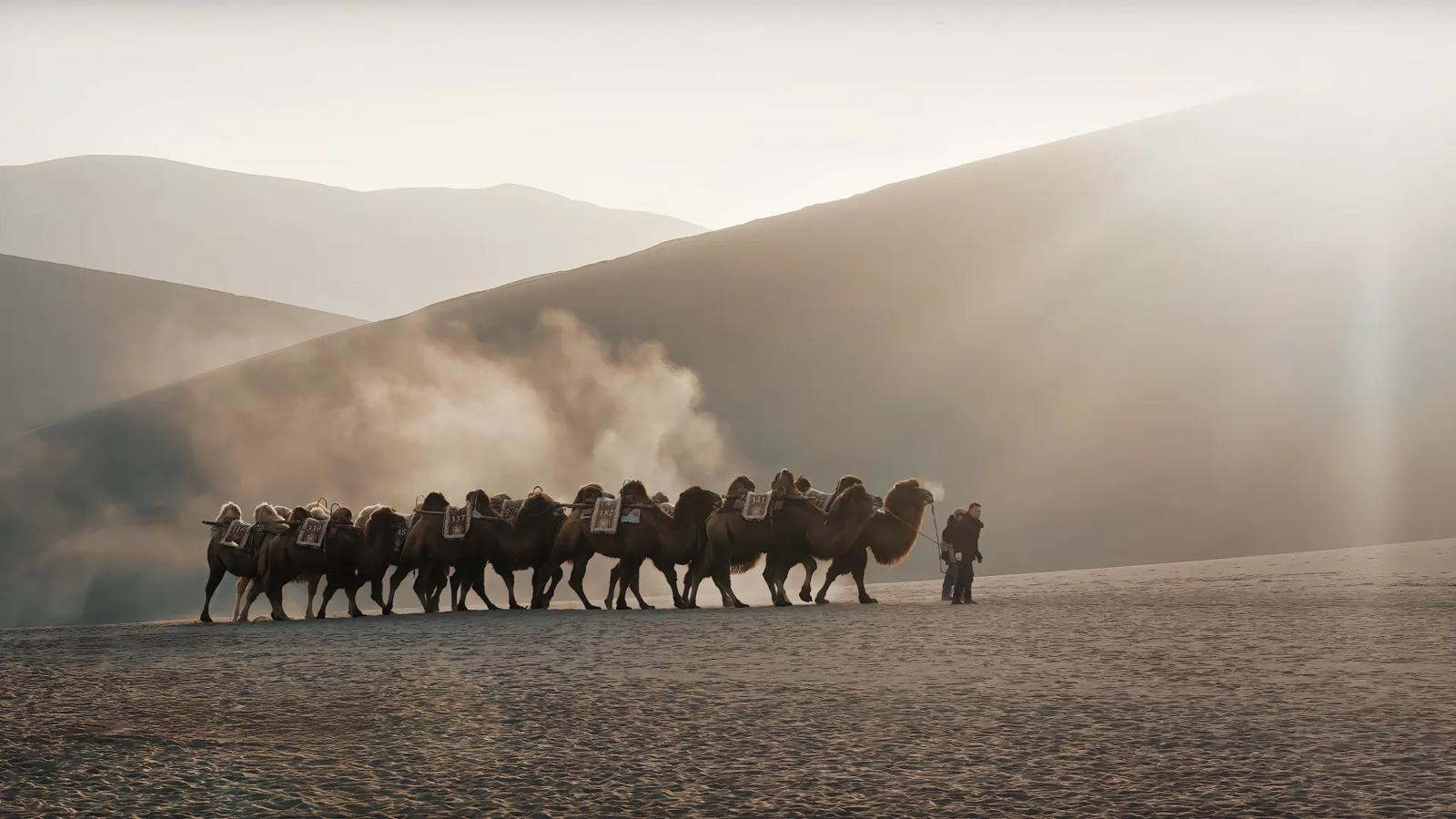
Camel riding through the Mingsha Dunes
One of Dunhuang's most iconic experiences is riding through the desert dunes on camelback, following ancient routes that recall the passage of Silk Road caravans.
Watching the sunset in the desert
Climbing to the top of the dunes at the end of the day offers a spectacular landscape, as the sand changes colour with the sunlight.
Visiting the Mogao Caves with a guide
Touring these caves with explanations helps you better understand the history, Buddhist art and Dunhuang's importance as a key point on the Silk Road.
Culture & fun facts
A key oasis on the Silk Road
For over a thousand years, Dunhuang was one of the main oases on the Silk Road, where merchants, pilgrims and travellers from different cultures exchanged goods, ideas and religions.
China's best-preserved Buddhist caves
The Mogao Caves preserve thousands of murals and sculptures narrating stories of Buddhism and life on the ancient Silk Road, making them one of the world's most important collections of Buddhist art.
The Hidden Library of Dunhuang
At the beginning of the 20th century, a chamber sealed for centuries was discovered in one of the caves containing thousands of ancient manuscripts in different languages, a find considered one of Asia's most important archaeological discoveries.
Local cuisine
Dunhuang's cuisine reflects its history as a crossroads on the Silk Road, combining influences from northern China, Central Asia and the region's Muslim traditions. Dishes are usually flavourful and hearty, with noodles, lamb and spices taking centre stage. Among the most popular specialities are Lanzhou-style beef noodles, very common in the region, grilled lamb, typical of the northwestern areas, and various types of handmade noodles and dough prepared by hand. In Dunhuang's markets and streets it is also common to find skewers, flatbreads and small dishes inspired by the cuisine of the ancient Silk Road caravans.
Tips for travellers
Dunhuang is located at the western end of Gansu Province and is usually visited as part of an itinerary along the Silk Road in China. The city has an airport and rail connections, making it easy to reach from cities like Xi'an or Lanzhou. To visit the main attractions, such as the Mogao Caves and the Mingsha Dunes, it is recommended to spend one to two days. It is advisable to bring sun protection, sunglasses and water, especially when visiting the desert, where temperatures can vary greatly between day and night.
Coming soon