Relic-inspired menus help Chinese art treasures transform static symbols into immersive consumer experiences
During the 2026 Spring Festival holiday season, museums across the country are once again buzzing with excitement, with reservation slots filling instantly and long queues forming at entrances.
The holiday rush has some visitors heading straight for the star exhibitions, eager to get the best view before the galleries fill up. Others, shopping lists in hand, go straight to the museum shop to pick up souvenirs on the go. Meanwhile, a growing number of people arrive for an entirely different reason: the museum food.
Liang, a traveler from Beijing, has kept her holiday visit to the Hebei Museum focused on two priorities. "I come for the national treasures — and a bowl of special local noodles," she said, referring to wheat noodles topped with beef, a very popular regional dish.
At lunchtime, the dining and shopping area in the basement of the Hebei Museum is packed with visitors.
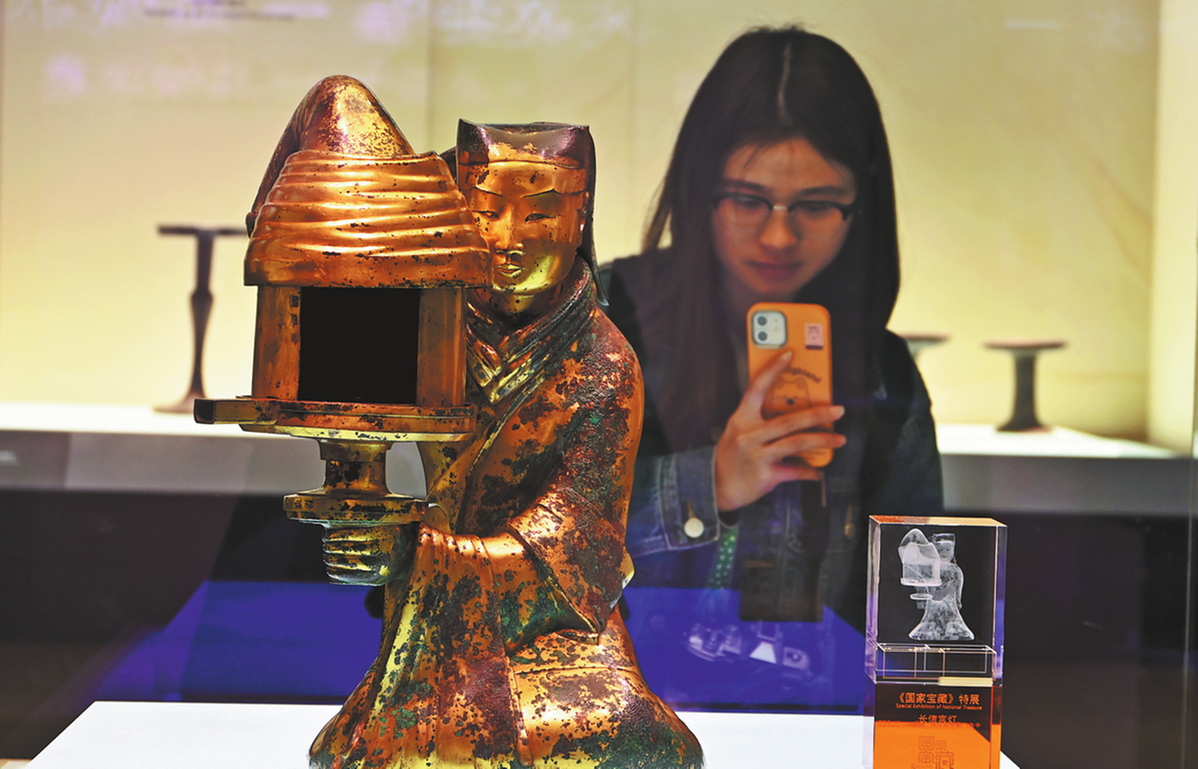
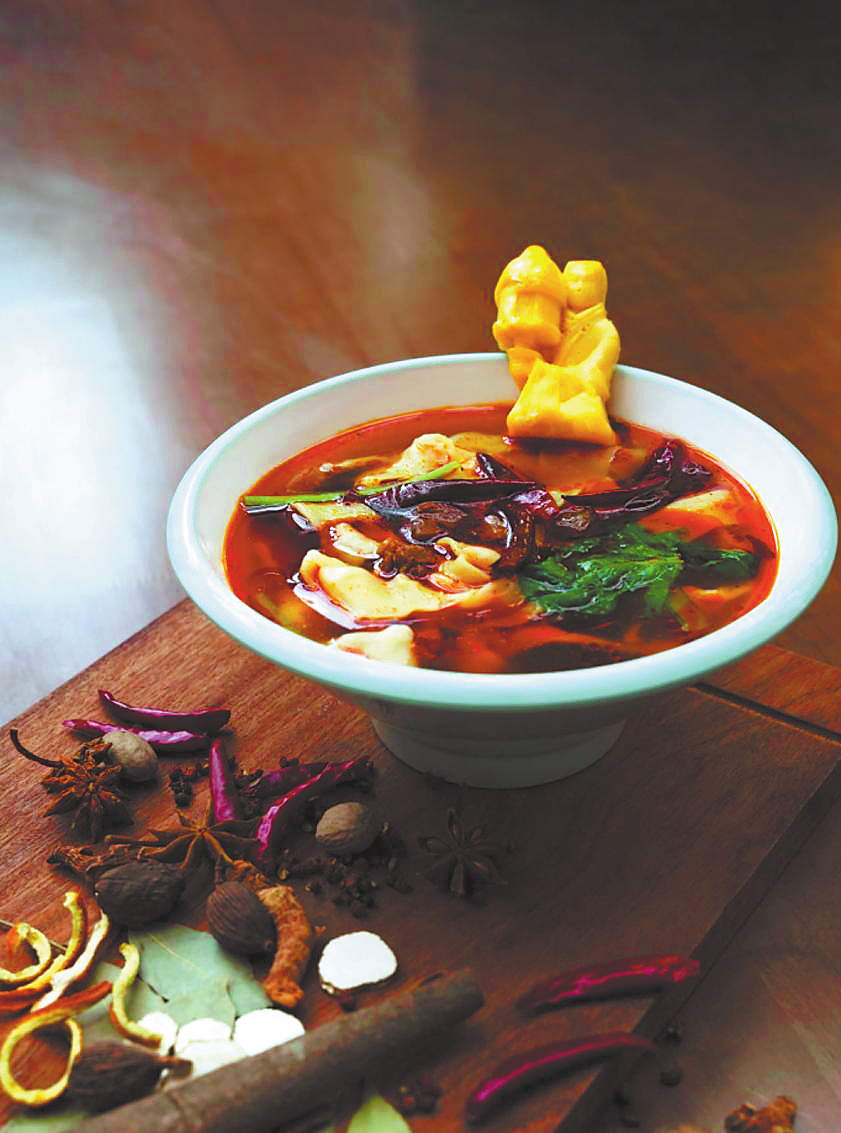
The bowl Liang ordered has an eye-catching element: a steamed egg, shaped like the Changxin Palace Lamp, delicately placed on top of the noodles. "As soon as it arrived, my eyes went straight to it," said Liang. "It's like a little lamp on the noodles — it feels like tasting a piece of history."
A young visitor nearby laughed and added: "I came for the national treasures, but I didn't expect to be fed first."
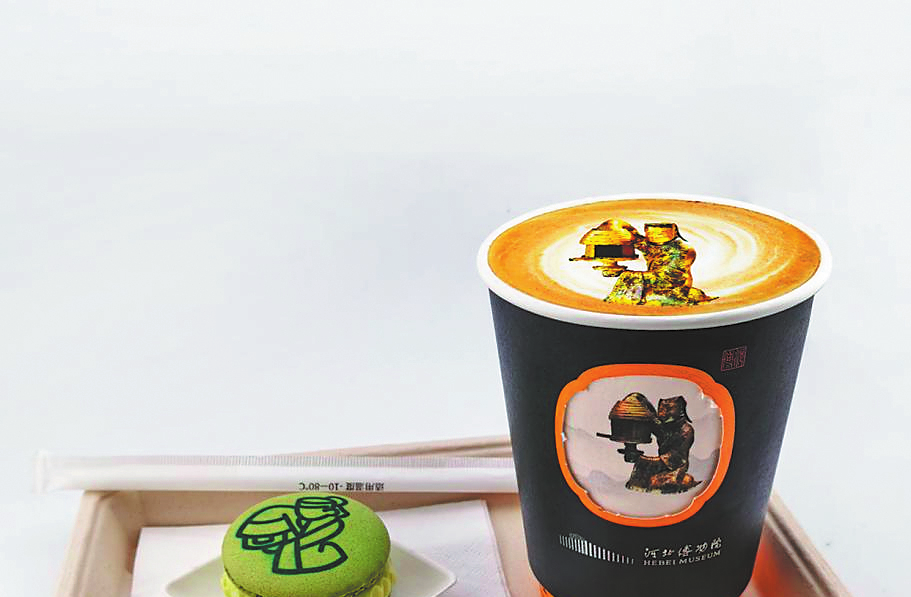
The dish is inspired by a nearby exhibition. The Changxin Palace Lamp, one of the Hebei Museum's most iconic treasures, is a gilt bronze artifact from the Western Han Dynasty (206 BC-24 AD), more than 2,000 years old. Shaped as a kneeling maiden holding a lamp, it features an ingenious smoke-control design, with fumes filtered through a hollow sleeve and collected inside the figure. Its structure can also be disassembled into several parts, facilitating soot cleaning and showcasing both functional design and aesthetic beauty.
Li Kexin, a staff member of the Hebei Museum's art and design department, said these relic-inspired dishes were created to meet a practical need: providing visitors with a place to eat after touring the galleries, while offering a more accessible way to share the stories behind the collection.
"Dining at a museum is part of the cultural experience," said Li. "We hope these dishes offer more than just good taste — that they can also serve as a more engaging way to share the stories behind our relics and heritage."
According to Li's observations, in-museum spending has increased during the recent Spring Festival holidays, with more visitors choosing to dine on the premises and browse the gift shop.
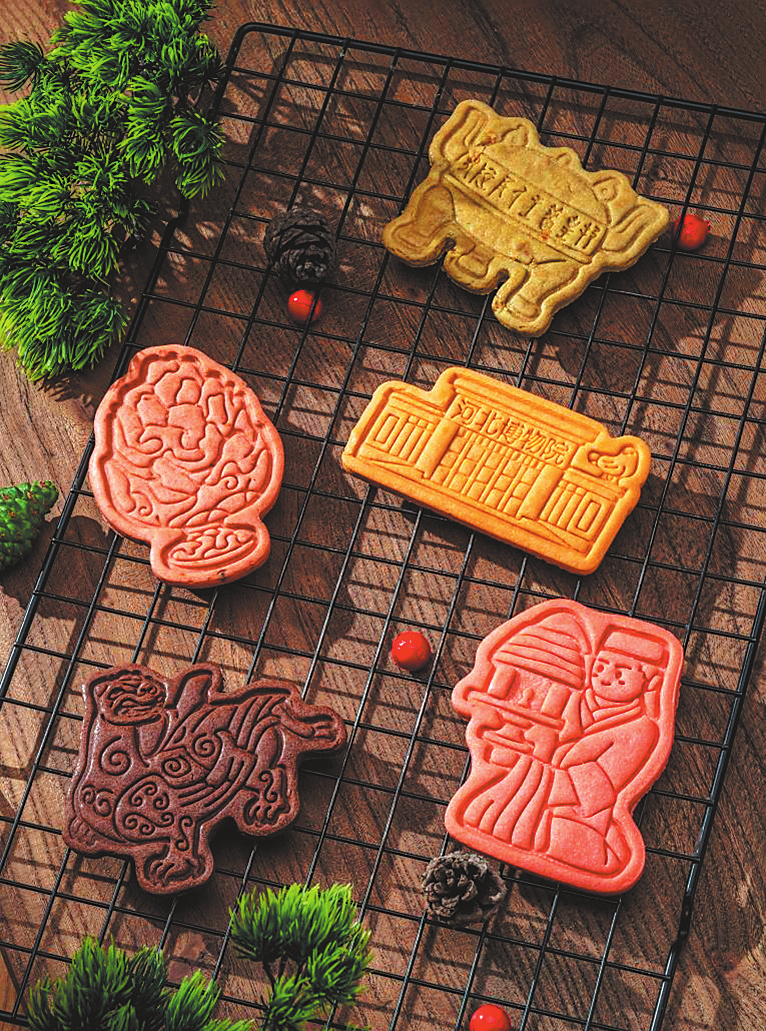
Beyond noodles, the Hebei Museum has expanded its relic-inspired menu to include mousse desserts, yogurt, and coffee topped with latte art and other treats that bring museum motifs to cookies, cakes, drinks — and even tableware, said Li.
Highlighting a richer visitor experience, the staff member noted that the art and design department started with the relics themselves, drawing inspiration from their cultural significance, shapes, patterns, and decorative motifs to create new dishes and drinks.
This trend extends beyond the Hebei Museum.
More than 200 kilometers to the south, in Anyang, Henan province, the Yinxu Museum offers its own edible tribute to history: noodles printed with oracle bone inscriptions, one of the oldest forms of Chinese writing.
The Yin Ruins, the remains of the late Shang Dynasty capital (c. 16th-11th centuries BC), are best known as one of the major archaeological sites where oracle bone inscriptions were unearthed. Printed with squid ink, each noodle strand carries a different character. When diners finish the bowl, wishes for good fortune, prosperity, and well-being are literally eaten.
The restaurant reports selling 500 to 600 bowls per day on weekends and holidays. On social media, one diner joked: "After this bowl, I literally have culture in my stomach."
This witty comment highlights how ancient writing has entered everyday life — right at the dinner table.
Wang Peng, a researcher at the Beijing Academy of Social Sciences, said that relic-inspired dish innovations are helping museums transform static symbols into immersive consumer experiences, shifting visits from simply observing exhibitions to actively engaging with them.
"This kind of crossover satisfies people's appetite for a more immersive cultural experience, letting taste reinforce and deepen their connection with what they see," added Wang. "It keeps visitors in the museum longer, encourages repeat spending, and helps museums evolve from purely cultural spaces to more diversified consumption spaces."
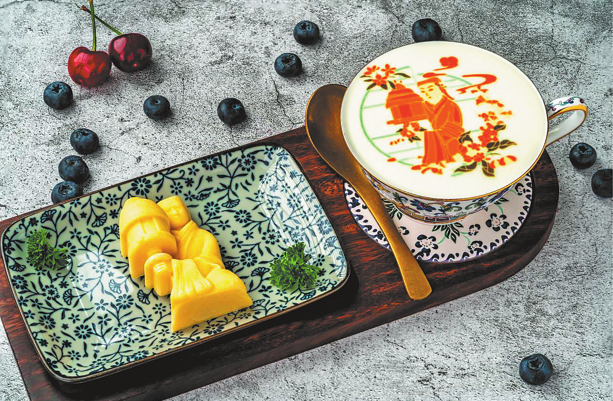
The Hebei Museum creates some relic-inspired dishes to meet a practical need — providing visitors with a place to eat after touring the galleries — while offering a more accessible way to share the stories behind the collection. CHINA DAILY
Meanwhile, museum dining has become a powerful draw for visitors, also fueled by a buzzword often used by young people: whether something is "Instagrammable."
At many venues, the excitement is less about taste than about how irresistible the dishes look online. A single photo or short clip can showcase the design, colors, and playful nods to famous artifacts, tempting viewers to add the place to their itinerary long before they arrive.
At the Capital Museum, a horse-shaped pastry launched for the Year of the Horse soon started circulating on Xiaohongshu (RedNote), a lifestyle-sharing platform. One blogger described it as light and refreshing, with an intense passion fruit touch and chunky blueberries in the filling.
The post quickly triggered a chain reaction. Comments like "So pretty" and "I need this" poured in, followed by a flood of logistical questions: Which area of the museum sells it? What floor is it on? And what time should you show up for the best chance of getting one?
When online buzz spills over into real life, a familiar ritual unfolds. The dessert arrives, hands hover for a moment, the tray is pushed into better light, angles are adjusted, phones come out for quick photos — and only then is the first bite finally taken.
Xu Jing, a professor at the Guanghua School of Management at Peking University, said social media is transforming how young travelers make consumption decisions and, more broadly, transforming the current cultural spending experience.
"Today, when consumers decide where to travel or spend their leisure time, they often start on social platforms like Xiaohongshu and Douyin," said Xu. "Posts about must-visit spots, must-eat food, and popular check-in locations increasingly influence where consumers choose to go and spend."
Wang, a researcher at the Beijing Academy of Social Sciences, added that this social media-driven dynamic goes beyond traditional marketing, enabling museum culture to reach a broader audience in a lighter, more accessible way and accelerating its entry into mainstream consumption spaces.
Beyond novelty and social media appeal, a more down-to-earth reason is driving the popularity of museum dining: convenience and affordability.
Visiting a museum can be physically demanding, and having access to a hot meal on-site makes a significant difference — this is a common sentiment shared by many visitors.
Museums such as the Sichuan Museum and Liaoning Provincial Museum have especially benefited from offering tasty yet affordable food options.
At the Sichuan Museum, canteen dishes start at just 3 yuan ($0.42), with most priced between 3 and 12 yuan.
Meanwhile, the Liaoning Provincial Museum offers a bowl of rice with meat and vegetables for 22 yuan.
"The museum canteen not only increases the time visitors spend there but also creates opportunities for additional spending," said Xu.
The growing footfall has expanded the possibilities of this new consumption experience.
The National Cultural Heritage Administration reported that museums across China received 72.65 million visitors during the 2025 Spring Festival, with daily attendance up 12.84 percent from the previous year.
Compared to traditional cultural products like fridge magnets, food is more closely connected to daily life and therefore has a greater capacity to drive consumption. Professor Xu noted that food, as a necessity good with a focus on experiences, has a higher repeat purchase rate.
"You might not buy a second fridge magnet, but everyone needs dinner, and visitors arrive in waves," she explained.
"For museums, this makes food a stronger driver of sustained consumption."
Xu also highlighted that food can serve as a medium for culture. According to her, when cultural elements are incorporated into more everyday consumption experiences, visitors' understanding and connection with culture emerge more naturally.
This approach, she explained, goes beyond simply "seeing" and "hearing explanations," encouraging visitors to engage with and embrace culture more organically in their daily lives.
The government's push toward pro-growth policy has laid the groundwork for new consumption experiences in museums. To boost domestic demand and unlock untapped consumption potential, a joint initiative by nine central Chinese departments, including the Ministry of Commerce and the Ministry of Culture and Tourism, encourages museums to open their collections and collaborate with external organizations to create innovative cultural and digital products.
"This collaboration will foster a collective ecosystem, broadening the concept and opening new possibilities for the development of cultural products," said Xu.
However, as more museums introduce similar relic-inspired menus, initial innovations may lose their novelty and the public may tire of them, thus reinforcing the importance of having solid and lasting cultural value.
The focus should shift from one-time hits to creating compelling narratives — building a deep and vibrant story that can evolve over time. This will help develop cultural IPs or brands with lasting significance, said Professor Xu.
"Beyond simply attracting tourists, museums should deepen their ties with local communities, gaining a deeper understanding of their cultural needs and consumption patterns to become an integral part of their daily lives," added Xu.