On Wednesday, at the Milan-Cortina Winter Olympics, Chinese freestyle aerial skiing star Xu Mengtao delivered an impressive series of jumps to defend her Olympic title, offering a performance that recalled her historic triumph in Beijing four years ago, a moment still vivid in millions of memories.
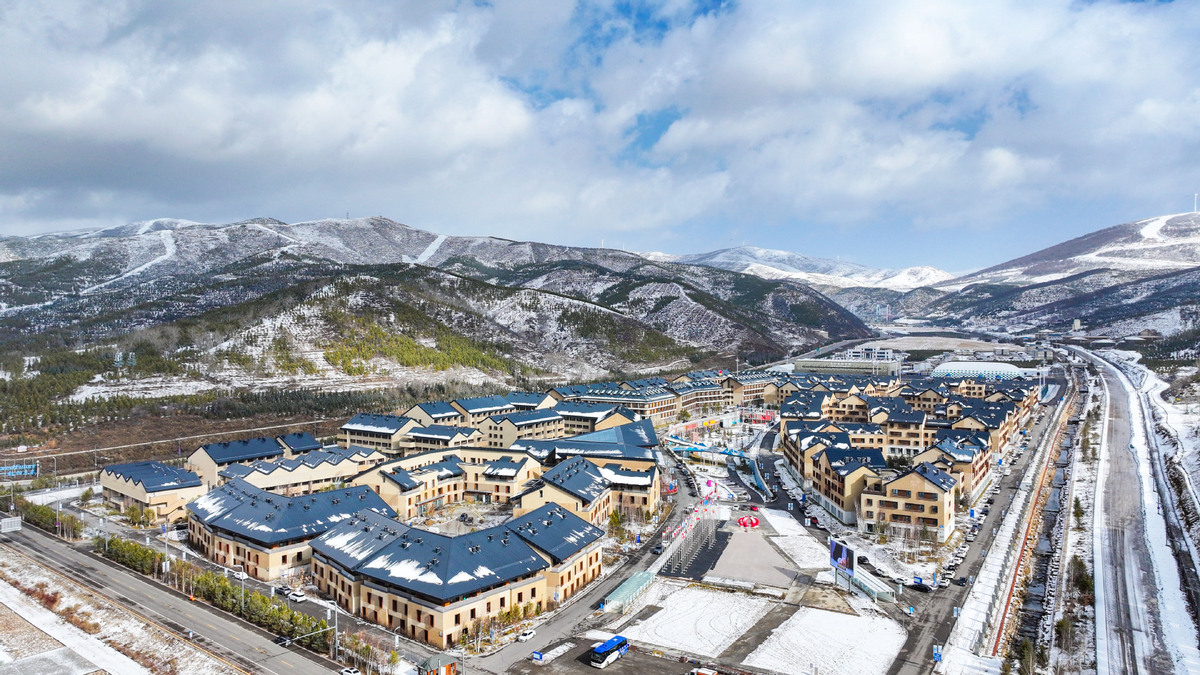
On the other side of the world, at Genting Snow Park in the Chongli district of Zhangjiakou city, Hebei province, northern China, the same slopes where Xu made history in 2022 are buzzing with life year-round.
Today, Genting Snow Park, about 200 kilometers northwest of Beijing, hosts more competitions than ever, with events increasing 30 percent annually since the Beijing Winter Olympics, and receives about 6,000 daily visitors during the 2025-2026 snow season starting in November.
After the Beijing Games concluded four years ago, the resort faced the test of turning a fleeting moment of glory into a lasting legacy.
To attract recreational skiers, the resort redesigned three of its six Olympic courses, lowering the difficulty without diminishing the thrill. Now, 45 runs stretch across the park, of which 42 cater to beginners, experienced skiers, and thrill-seekers alike.
For regulars like 61-year-old Zhang Ye, the convenience is unmatched. Retired from Beijing, she skis every week. "It's just one hour by high-speed train and 10 minutes by shuttle to the resort. It's incredibly convenient," she said while putting on her skis.
Chongli has transformed to meet growing visitor demand. In 2025, over 10 million tourists passed through the district. Express buses now directly connect Beijing airports and South Railway Station to the resort, while free shuttles link train stations to the slopes, largely eliminating the "last mile" problem.
However, the district's ambitions extend beyond winter. With cool temperatures and over 70 percent forest coverage, Chongli has cultivated its year-round appeal through summer and autumn activities like mountain biking, hiking, and camping, while repurposing Olympic venues into outdoor parks and educational camps.
For example, the Snow Ruyi ski resort installed a tourist cable car and a forested descent route that lets visitors choose their own speed.
Summer tourism alone in 2025 attracted 5.1 million visitors to Chongli, more than in the winter season, generating 4.42 billion yuan ($636.9 million) in tourism revenue.
About 30,000 people are engaged in winter sports or tourism in Chongli, and 80 percent of them have year-round work, according to official data.
Chongli represents a broader vision of China's rapidly expanding ice and snow industry. According to the China Ice and Snow Economy Development Report 2025, the sector grew from 364.7 billion yuan in 2016 to over 1 trillion yuan in 2025, with winter tourism participation exceeding 300 million people for three consecutive seasons.
The enduring enthusiasm has fostered a complete value chain spanning equipment manufacturing, event management, training services, and tourism.
About two hours' drive from Chongli, the Xuanhua Ice and Snow Industrial Park has seized this momentum. Inside the park, Lidakis, a Chinese snowboard brand founded in 2003, has its warehouse stocked with boards, boots, and other gear for both domestic resorts and foreign clients.
"Twenty years ago, snowboards were entering the Chinese market and few people bought them," said Jin Huiyuan, the 68-year-old CEO of Lidakis.
"For example, children's boards. Before 2015, 100 boards sold in three years. By 2016, 3,000 weren't enough. By the 2022 Winter Olympics, even 10,000 couldn't meet the demand," he added.
With the rise of online live streaming, Jin is now expanding Lidakis' direct-to-consumer sales channels.
"The number of orders I receive per month now equals what I handled during an entire snow season during my first years in this field," said Qu Xiaotong, a 32-year-old ski photographer, noting that China's growing winter sports fan base has been the main driver of his business.
"The growth of winter sports in China, especially after the 2022 Beijing Olympics, has changed everything: my work, the industry, and even the way people experience snow. It's as if the Olympics never ended," said Qu.