As visitor numbers rise, Guizhou is shifting its focus from transit travel to a destination for sustained engagement, reports Yang Feiyue.
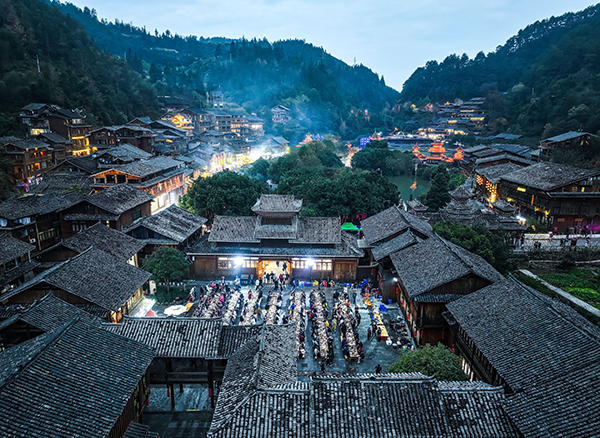
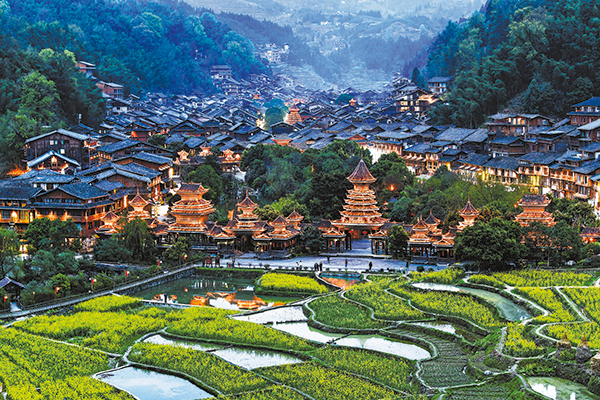
Mountains, rivers, and bridges have long shaped Guizhou's landscape. Now they are shaping its ambitions. The mountainous province in southwestern China is accelerating efforts to become a top-tier tourism destination, leveraging its ecological strengths, cultural diversity, and improving infrastructure to attract visitors from both China and abroad.
"Guizhou is a magical and beautiful place," says Cai Chaolin, vice-governor of Guizhou province, at a tourism industry conference held in collaboration with a major online travel agency earlier this month.
Cai highlights the province's ecological credentials, noting that its forest coverage is 63.3 percent and that the proportion of days with good air quality remains above 98 percent.
He adds jokingly that the remaining days are largely due to fireworks set off during the Spring Festival.
With an average summer temperature of 23°C, Guizhou has become a popular destination for retreats and extended stays, according to industry experts at the conference. Transportation infrastructure, once a limiting factor, has undergone rapid improvement. Guizhou now has more than 9,000 kilometers of highways and over 4,000 kilometers of railways.
"All our counties are connected by highways, and all nine cities and prefectures are served by airports and high-speed rail," notes Cai.
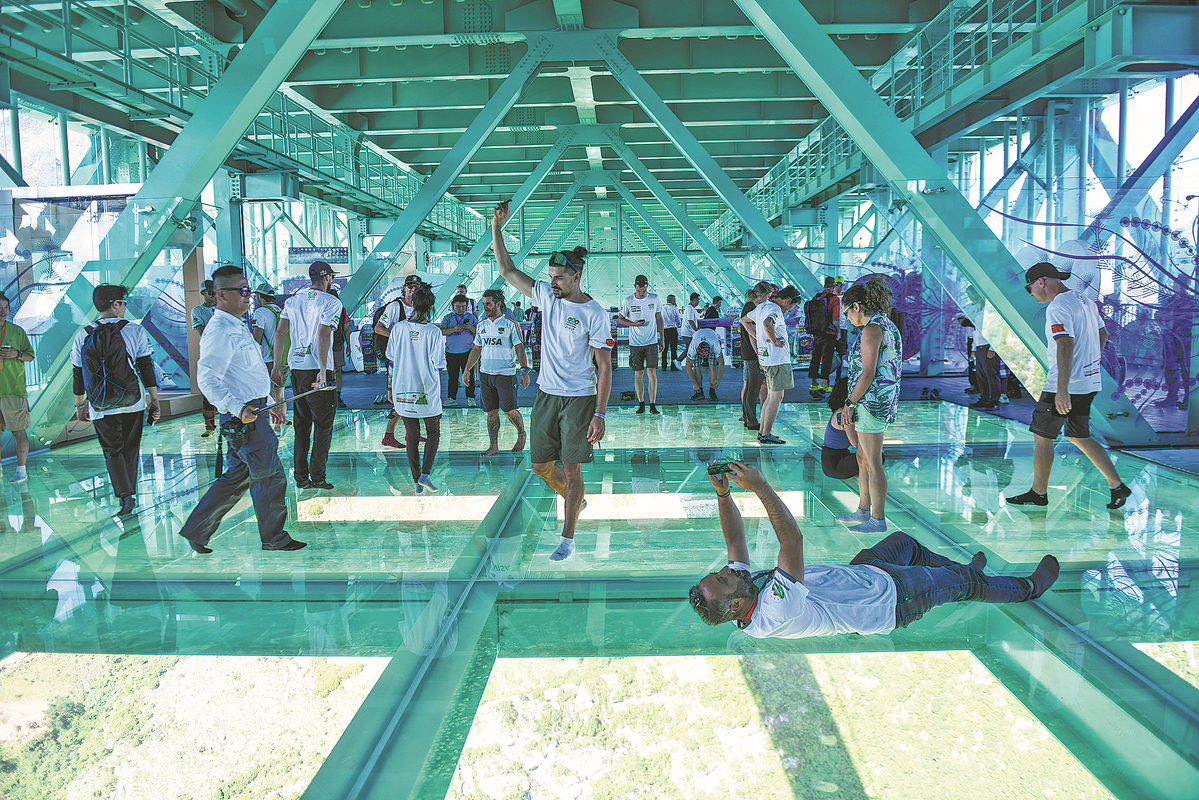
The province is also home to about half of the world's 100 highest bridges.
"The Huajiang Grand Canyon Bridge, which opened last September as the world's highest bridge, has quickly become a widely shared online attraction," he says.
Guizhou's tourism heat index has consistently ranked among the top three nationally in Trip.com's monthly monitoring.
When final figures for 2025 are released, both tourist arrivals and total tourism spending are expected to have continued growing, with a year-on-year tourism increase of 50 percent, according to Cai.
Efforts are underway to diversify tourism offerings and improve quality.
Guizhou is promoting the integration of culture, tourism, sports, specialty liquor, bridge tourism, and wellness-oriented extended stays, according to local authorities.
Grassroots events such as the Village Super League and Village Basketball Association have attracted enormous online attention, with related content receiving over 100 billion interactions.
Service capacity and digital tools are being upgraded in parallel.
The province is expanding multilingual guide services, improving cross-border payment services, planning inbound duty-free shops, and promoting small-group travel products, according to Cai.
Smart tourism platforms like "One Code Touring Guizhou" and AI-powered tourism services enable visitors to customize itineraries and connect more efficiently with offline service providers, he adds.
The province has also opened 15 international air routes and plans to expand the number to more than 25 during the 15th Five-Year Plan period (2026-30), aiming to attract more than 2.5 million inbound visitors annually.
Incentive policies have also been introduced to encourage travel agencies to bring more international tourists to the province, Cai explains.
The aforementioned online travel agency has observed a systematic improvement in the province's tourism development.
"We have witnessed the growth in scale, structural optimization, brand building, and industrial development of Guizhou's tourism sector," says Wang Wei, senior vice president of the group.
He notes that online tourism reception and revenue in 2025 have grown multiple times compared to pre-COVID levels, while inbound tourism has become the fastest-growing segment, with consumption growth exceeding 50 percent for two consecutive years.
At the operational level, the Guizhou Tourism Industry Development Group works to translate these advantages into immersive, high-value experiences.
"Guizhou is a park province that can be experienced with all five senses," says Yang Kun, deputy general manager of the group.
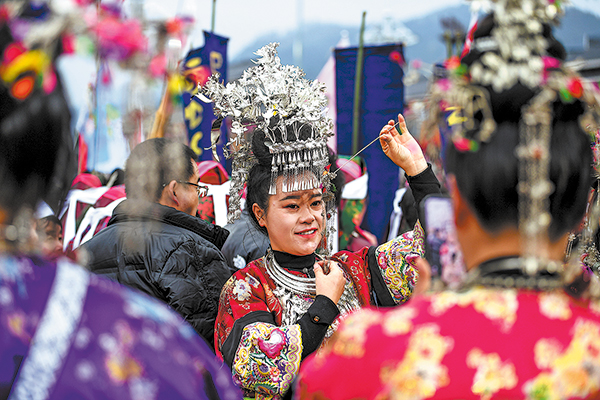
From iconic natural monuments, red (revolutionary) heritage sites, and ethnic traditions, to Wang Yangming's philosophy — which originated in Guizhou — and the Tunpu (fortified village) settlements of the Ming Dynasty (1368-1644), she emphasizes that the province offers experiences beyond tourism.
Thematic routes spanning astronomy, geology, intangible cultural heritage, and mountain adventures will be offered, along with integrated platforms supporting extended-stay tourism and community services, she adds.
The goal is to accelerate Guizhou's transition from a transit destination to a place of deep and sustained engagement.