KUNMING — After years of living in China, Antonio from Spain discovered a new passion for the intricate world of tea, noting that his journey through Yunnan, in southwestern China, sparked that love.
On his days off, he often takes European tourists along the ancient Tea Horse Road to explore the intersection of tea and coffee cultures along this millennia-old trade route. The route once connected the tea mountains of southwestern China with the Qinghai-Tibet Plateau and beyond.
For centuries, the Tea Horse Road was a bustling corridor for caravans trading tea for horses. Today, the bells of horse caravans have faded, but the road is reinventing itself as a prime destination for "slow travel" and cultural immersion.
The legacy of the ancient caravans endures in local gastronomy. In Yunnan's tea-growing areas, restaurants serve "new caravan dishes" like coffee-glazed ribs and tea-infused beef. These flavors blend the trail's rugged history with modern culinary creativity.
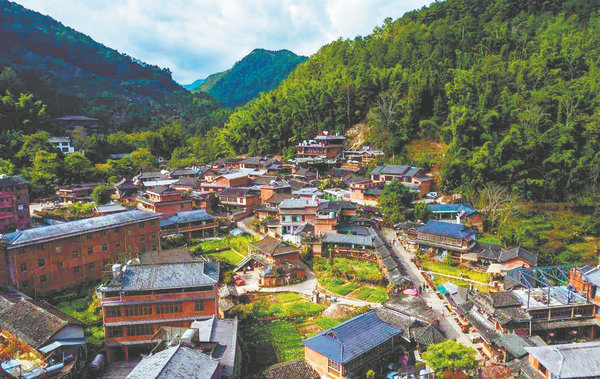
In the Ning'er Hani and Yi Autonomous Counties, the starting point of many ancient routes, tourism is becoming nearly omnipresent. Qu Shishuai, a traveler from Hangzhou in eastern China, recently spent his vacation at a local workshop. There he learned the traditional steps of tea-making: withering, rolling, pressing, and drying.
"I didn't just learn a skill; I left with a tea cake I made myself," he says.
Further north, in the ancient town of Shaxi in Dali, ancient horse hoofprints are still etched into the stone bridge. Now, however, those hoofprints lead to a modern bookstore housed in a repurposed barn, where the aroma of fresh coffee mingles with traditional folk songs.
In 2023, the Cultural Landscape of the Old Tea Forests of the Jingmai Mountain in Pu'er became the first tea-themed UNESCO World Heritage Site. This has further increased global recognition of the ancient road.
Tea is at the center of daily life on Jingmai Mountain. It is used in everything from weddings to resolving conflicts. These deep cultural roots are attracting a new wave of travelers who don't just visit for a day; they stay for months, picking tea in the morning and watching the sea of clouds from hillside cafes in the afternoon.
Data shows that from January to November 2025, Yunnan received over 4.98 million long-stay visitors, an increase of nearly 55 percent year-on-year.
The province's "residential tourism" has breathed new life into more than 800 villages, creating about 63,500 local jobs and increasing the average monthly income of participating farm households by more than 2,700 yuan ($385.6).
The ancient Tea Horse Road is also attracting a growing number of international tourists, as China's expanded visa-exemption policies have drawn an increase in foreign visitors to remote villages. To cater to international tastes, Antonio has noticed that villagers are adding Western breakfasts to their traditional tea service.
As the ancient road becomes a place for "slow living," it continues to tell a story of connection, linking the past with the present and China with the world.