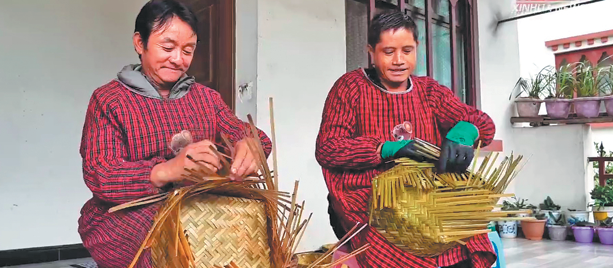
With a bamboo-splitting knife resting by his foot, 51-year-old Xin Xiangdong skillfully runs his fingers along bamboo strips soaked in water, weaving them into shape and sometimes even using his teeth to tighten a thread.
Sitting in his own courtyard, Xin practices a craft that generations in Badeng village, Metog county, have relied on for their livelihood. The village, home to the Monba ethnic group, lies deep in the towering Himalayas in the Xizang autonomous region, long isolated from the outside world.
"Bamboo weaving has always been at the heart of life here," says Xin. "It gave our village its name and has provided us with our livelihood for as long as anyone can remember." In the Monba language, Badeng means "straight vine bamboo."
Harvested from the lush, humid forests surrounding the village, bamboo taught Xin what it means to "live off the mountains." Yet for most of his life, that phrase meant exhausting labor. "Farming and herding barely sustained us. To trade for necessities, we had to carry bamboo products on our backs and climb out of the mountains," he recalls.
At 16, Xin made his first trip out of the mountains with handcrafted bamboo products. The round trip to another township took eight days. When he unloaded the flour, oil, and barley he had obtained through barter, he realized for the first time how arduous "living off the mountains" truly was.
"The mountains gave us bamboo, but transporting the products was incredibly difficult. The trails were narrow, and when we encountered rivers, we had to resort to zip lines or makeshift wooden bridges. It was exhausting and dangerous," he says.
When villagers gathered to chat, their favorite topic was a long-held dream: roads that would one day allow trucks to carry their bamboo products out of the mountains, recalls 55-year-old Xin Sheng, the Party secretary of Badeng village.
That dream began to take shape in 2013, when the Metog highway opened, improving connectivity. Gradually, every village in Metog was connected to the road network.
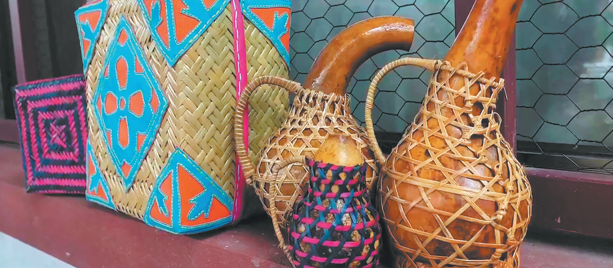
What was once an "isolated island" began to attract visitors. Bamboo products became souvenirs sold at villagers' doorsteps. Daily supplies that once had to be carried on foot now filled the shelves of the village supermarket. The conversation in Badeng shifted from longing for roads to dreaming of a new life.
In 2021, Badeng village relocated entirely further down the hillside to a more accessible location with modern infrastructure. With the road came tourists, drawn by the Himalayan scenery and rich Monba culture, ushering in a new chapter for "living off the mountains."
"Now tourists come for the scenery and culture, and our bamboo sells better than ever," says Xin Xiangdong. "Some neighbors run guesthouses, others have opened small restaurants serving local flavors, and the village even has a well-stocked grocery store. We now have multiple income sources and a better life."
According to data, total income of Badeng village residents exceeded 8 million yuan ($1.15 million) in 2025, with sales of bamboo products and other local specialties, along with tourism-related income from dining and accommodation, contributing more than 2 million yuan.
"In the past, 'living off the mountains' meant surviving through hard labor. Now, it means thriving amid lush mountains and pristine waters through tourism," says Xin Xiangdong.