
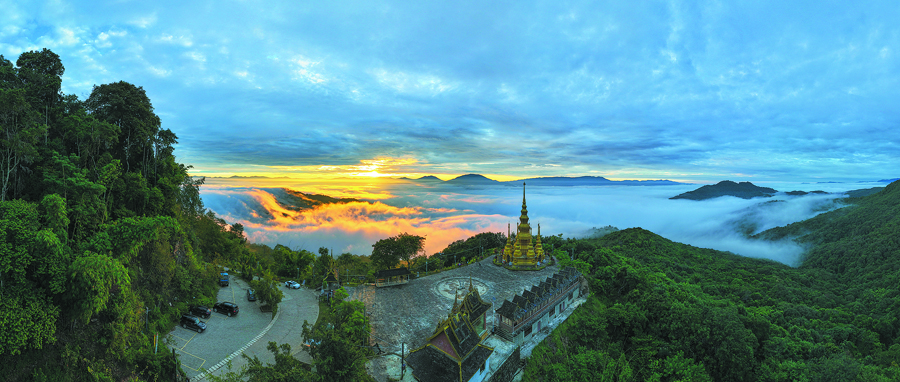
On Jingmai Mountain, a long relationship with the forests shapes livelihoods while visitors discover a culture rooted in patience, report Hou Chenchen and Li Yingqing in Pu'er, Yunnan.
On Jingmai Mountain, in Yunnan province, southwestern China, tea is much more than a beverage. For 64-year-old Nankang of the Blang ethnic group, tea is medicine. He kneads tea leaves, packs them into bamboo tubes, and buries them. Months later, the leaves ferment into a sour condiment.
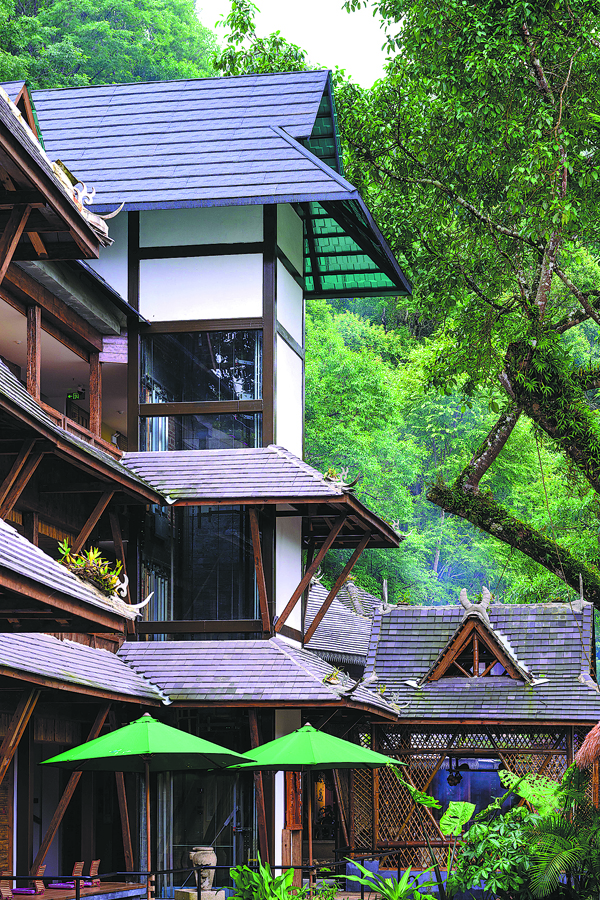
For residents of different ethnic groups on Jingmai Mountain, tea is also an invitation. Families organizing weddings wrap a pinch of tea and two candles in banana leaves as a "tea invitation."
Located in Pu'er, Jingmai Mountain sits near a town that once thrived on the tea trade and later gave its name to Pu'er tea. One of the six major categories of tea in China, Pu'er tea has its roots in this region.
Ancient tea forests stretch across the mountains, dotted with nine villages. For centuries, the Blang, Dai, Hani, and Va ethnic groups have planted, harvested, and celebrated tea.
Today, nearly 6,000 inhabitants live here, and almost every household depends on tea for their livelihood.
In 2023, the "Cultural Landscape of the Old Tea Forests of the Jingmai Mountain in Pu'er" was inscribed on the UNESCO World Heritage List.
The designation attracted new attention to Jingmai Mountain. In early 2026, The New York Times included Yunnan on its annual list of "52 Places to Go." The publication highlighted how the ancient Tea Horse Road, which once transported tea from Yunnan across Asia, is regaining life among modern travelers. Yunnan was the only destination in China to appear on the list.
This is the third Spring Festival since the UNESCO designation, coinciding with the Year of the Horse. The villages fill with visitors. People come from afar, eager to see one of the oldest tea gardens in the world and the remnants of the Tea Horse Road.
Visitors crowd Xiangong's courtyard. In 2025, he renovated his ancestral home, expanding guest rooms from 15 to 36, making it the largest residence on Jingmai Mountain. January and February were fully booked weeks in advance.
In 2025, Jingmai Mountain had 207 homestays, employing over 1,100 people. Xiangong also established a tea cooperative in 2010, which grew from 27 to 229 households, with over 600 hectares of standardized tea orchards producing 200 metric tons of raw tea annually.
He says these changes are transforming the lives of younger residents. New opportunities such as homestays, online tea sales, and cultural tours are encouraging many locals to return home.
He adds that the influx of tourists has also made tea farmers' lives busier.
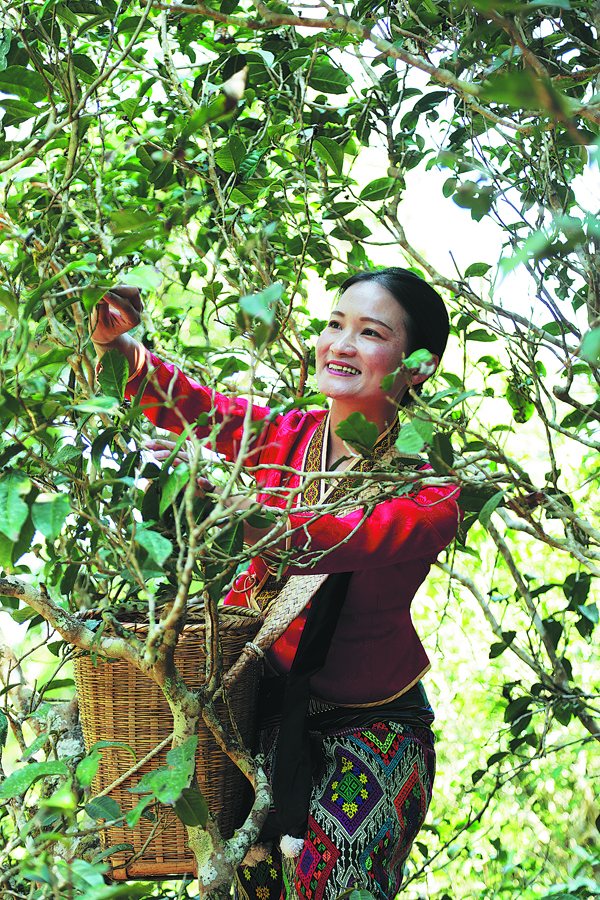
Beyond harvesting and processing tea, families now welcome guests and introduce them to their traditions. Signs offering free tea tastings hang in front of most houses.
"Now, we don't just sell tea," says Xiangong. "We're going to sell the 24 hours of this mountain, all four seasons."
Xiangong says visitors are drawn here because Jingmai Mountain offers something increasingly rare. Tea teaches "moderation" — respecting nature and time, not taking more than necessary.
Nankang says farmers follow strict rules: harvest only in spring and autumn, pick no more than 70 percent of the new leaves, and avoid summer and winter harvests.
Pesticides are banned. In the ancient forest, tall trees shade the tea bushes, shrubs fill the middle layer, and herbs and fallen leaves cover the ground. Spiders feed on pests, leaves decompose into fertilizer, and species naturally regulate each other, he adds.
In comparison, modern agriculture often plants a single crop across vast areas, creating a simplified ecosystem. A pest or disease adapts to that crop, causing catastrophic damage.
Data from the Xishuangbanna Tropical Botanical Garden of the Chinese Academy of Sciences shows that 943 seed plant species and 187 terrestrial vertebrates have been recorded in the forest. These species coexist with tea trees, forming a stable ecosystem and a natural barrier.
Chen Yaohua, associate professor at the College of Urban and Environmental Sciences at Peking University, says the "understory cultivation" of ancient tea trees reflects generations of ecological wisdom. This knowledge, passed down by locals, constitutes a "living testimony" of the traditional and ecological tea cultivation techniques developed by ancient Chinese.
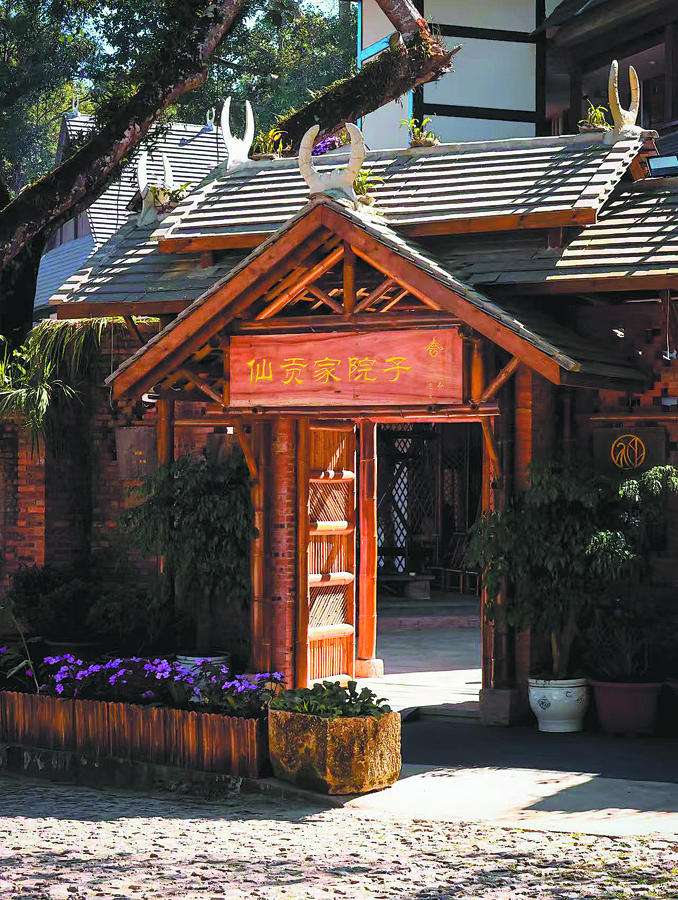
In about a month, Jingmai Mountain will welcome its spring tea harvest.
Chen says that, with a heritage spanning more than 1,000 years, it still offers perspectives for modern life. "How can humans and nature, as well as people themselves, live in harmony? On Jingmai Mountain, you will find the answer," he says.
Yang Qiyuan and Cao Yuqian contributed to this story.